Allergic: Our Irritated Bodies in a Changing World
Theresa MacPhail
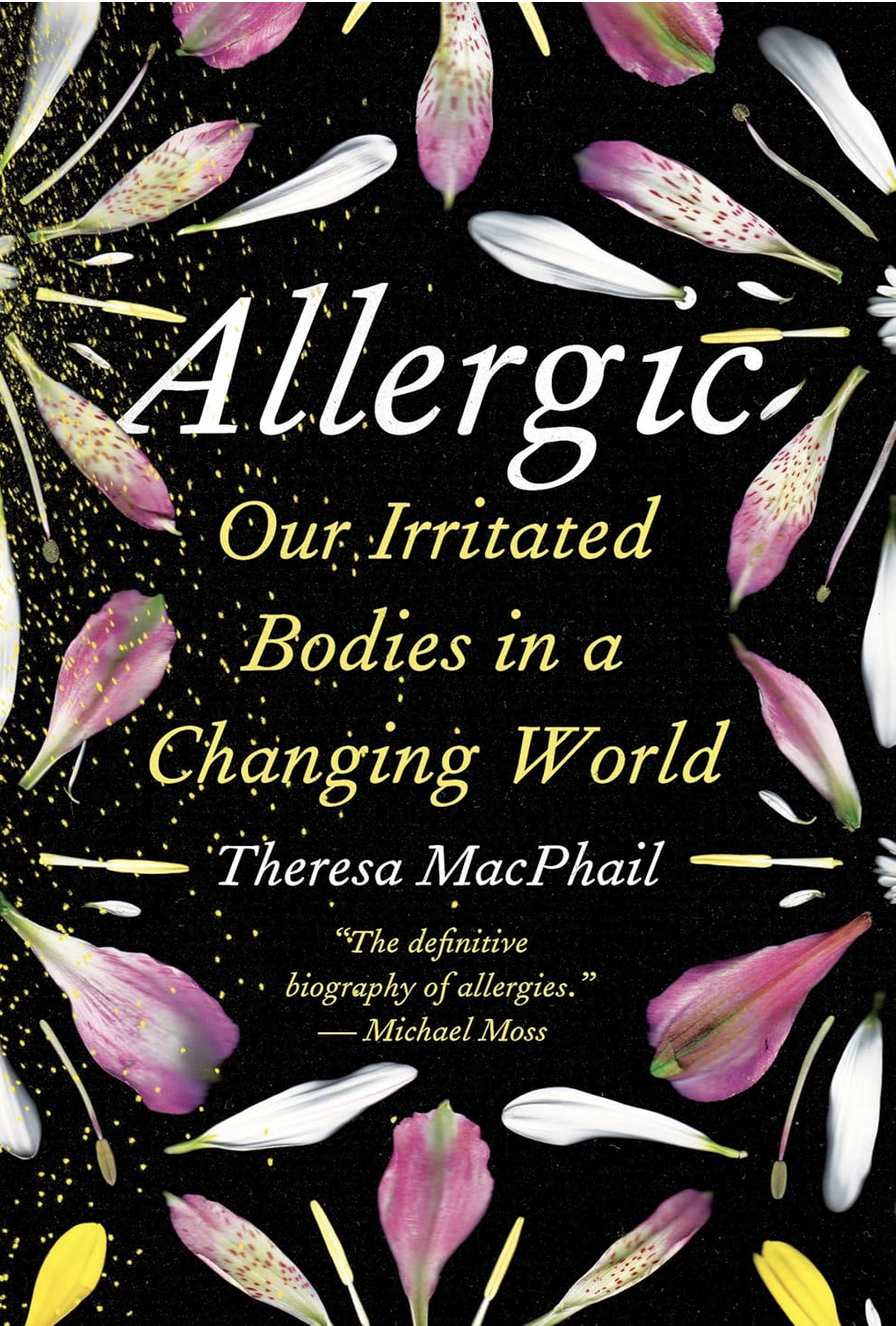
This is a book written by a medical anthropologist and primarily focuses on covering what allergies are, what we currently know about them, and their impact on people past and present. It’s accessible to a non-medical audience and doesn’t go too deep into the underlying mechanisms behind allergies. It primarily covers environmental and food allergies, though there’s some discussion of asthma and eczema.
Surprisingly, it doesn’t cover drug allergies, which is something I expected to see since antibiotic use in children **and** common misunderstandings surrounding allergies were both topics of discussion at points in the book.
I listened to this audiobook while pursuing and waiting for allergy testing myself. I’ve had allergies ever since I can remember and have collected more as I’ve gotten older, but it seems like the effects have gotten worse every year to the point where I’m now experiencing seasonal migraines. Mostly, this book made me feel grateful for my health insurance plan which gives me access to this testing in the first place, as well as treatment beyond it.
Facts I remember:
- Allergies come from an over-active immune system and changes in the environment lead to an increase in irritants and sources of inflammation.
-> Non-native plants extend pollen season since their growing season doesn’t align with that of native plants.
-> NO2 in diesel fuel has been shown to contribute to allergies — people who live near major highways, typically lower income families, have an increased risk of developing allergies and asthma.
-> Simply growing more plants causes the pollen load to increase, which can cause more people to experience allergy symptoms. A spike in allergy symptoms occurred after the start of the industrial revolution as farmers began growing more crops to feed animals at a higher scale.
-> It’s very rare to encounter a “new allergy.” Most allergies have been around as long as people have, but more people are experiencing problems due to increases in the amount of allergens and pollutants which carry these allergens farther than they would otherwise.
- Allergy treatment is expensive and time-consuming, making it inaccessible to many allergy sufferers.
-> Many WIC programs are too restrictive to allow for food substitutions and the foods available contain many common allergens (dairy & wheat).
-> Treatments span years and require continuous access to health care. Some treatments need to be performed multiple times a day for years.
-> The demographics of allergy-centered support groups tend to be higher-income white people. As such, these groups tend to only successfully support people in the same demographic. For example, access to allergists requires specialty care in the US, which means higher costs and co-pays.
- We don’t know where allergies come from, but there are some hypotheses.
-> Too Hygienic: Our environments are “too clean” now and so our immune systems are undertrained to be able to distinguish active threats, like viruses, from allergens
->> Some evidence to support this claim includes a finding that exposure to farm animals early in life decreases the risk of developing allergies later in life.
-> Overexposure: Increased exposure to an allergen can cause a person to develop a reaction over time. It’s common for researchers who work with animals (like rats) or plants to develop an allergy to the things they study.
-> Genetics: There are genetic links to some allergies and some allergies are more commonly passed along families
-> Gut microbiome: There is some evidence that children who take more antibiotics are more likely to develop allergies than children who didn’t. Of course, having more infections as a child could simply be an early indicator of an immune system issue.
- Allergy testing isn’t perfect
-> No reaction doesn’t necessarily mean you *don’t* have allergies, it just means your reactions could be more localized to specific areas of the body, such as the respiratory system
-> A reaction doesn’t necessarily mean you *do* have allergies. It very well could simply be an indication that you have sensitive skin.